How to Make Exercise a Habit That Actually Sticks
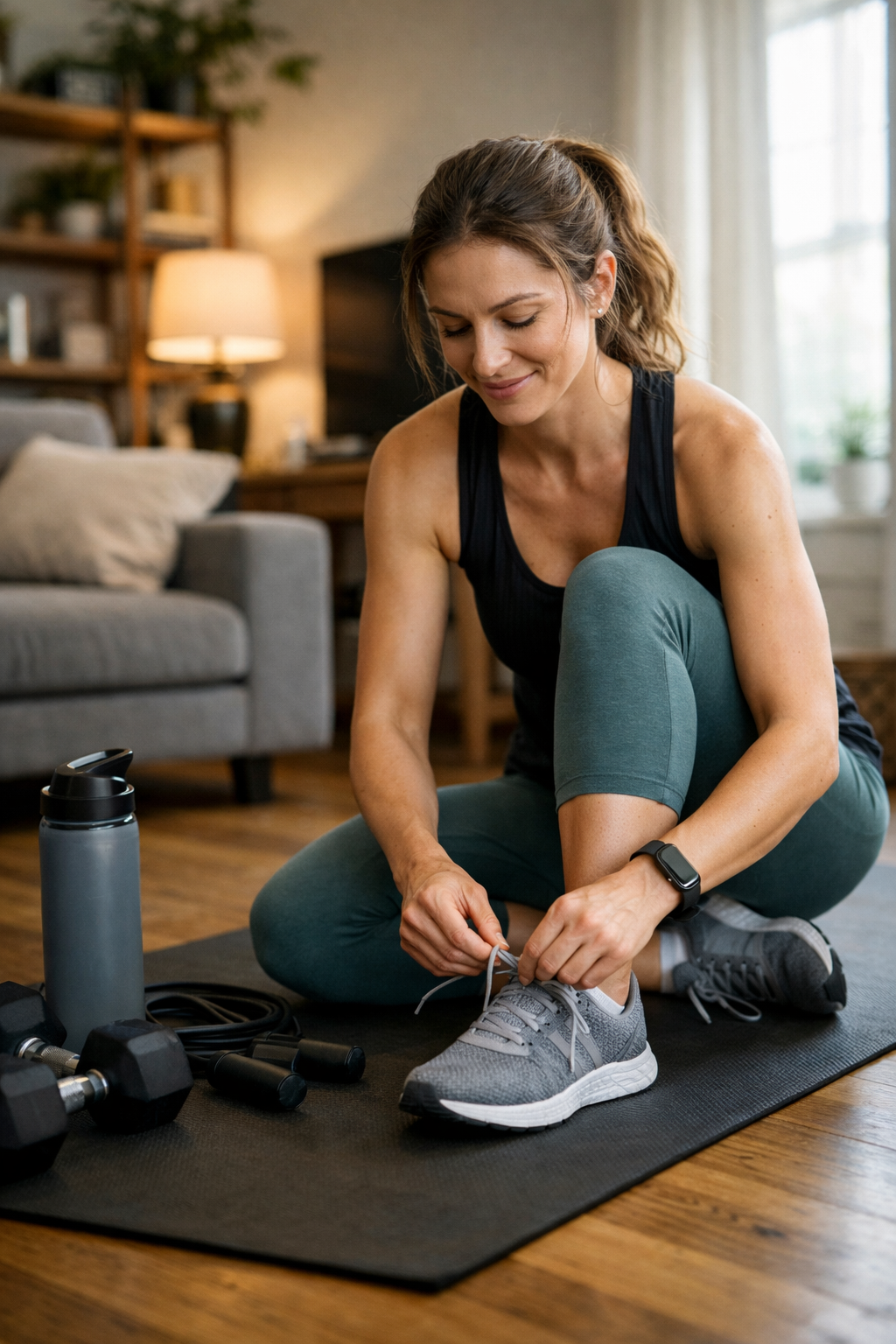
Let’s be real for a second…
Starting a workout routine? Easy.
Sticking to it when life gets chaotic, motivation disappears, and you’re running on low energy? That’s the hard part.
If you’ve ever felt like you’re constantly “starting over,” you’re not alone. I’ve been there—and so have so many of my clients.
The truth is, exercise doesn’t become a habit because you’re motivated.
It becomes a habit because you build a system that supports consistency.
Let’s break down how to actually make movement part of your lifestyle—not just a phase.
1. Stop Relying on Motivation
Motivation is great… when it shows up.
But it’s inconsistent. It fades. And it definitely doesn’t show up on busy days, stressful days, or days when you didn’t sleep well.
Instead of asking:
“Do I feel like working out today?”
Start asking:
“What’s the minimum I can do to stay consistent?”
Some days that might be:
A full strength workout
A 20-minute walk
Stretching before bed
Consistency beats intensity every single time.
2. Make It Realistic for Your Life
One of the biggest mistakes I see?
People trying to follow routines that don’t match their lifestyle.
If you’re busy, overwhelmed, or just getting started—your plan should reflect that.
Start with:
2–3 days per week
20–30 minute workouts
Simple, effective movements
You don’t need 6 days a week. You need something you can actually stick to.
3. Focus on Strength Training First
If your goal is weight loss, toning, or long-term health—strength training is your foundation.
It helps you:
Build lean muscle
Boost metabolism
Improve body composition
Support joint and bone health
And here’s the key: muscle is what gives your body that “toned” look—not just losing weight.
Even 2–3 strength sessions per week can make a huge difference.
4. Attach It to Something You Already Do
This is one of the simplest (and most powerful) habit-building strategies.
Pair your workout with something that’s already part of your routine.
For example:
Workout right after your morning coffee
Go for a walk after dinner
Do mobility work while watching TV
This removes the mental effort of “figuring out when” to work out.
It just becomes part of your flow.
5. Remove Barriers (This is HUGE)
If it feels hard to start, you won’t do it consistently.
Make it easier:
Lay your clothes out the night before
Keep dumbbells visible at home
Choose a gym close to home or work
Have a backup plan for busy days
The goal? Reduce friction.
Because the easier it is to start, the more likely you are to follow through.
6. Track Your Wins (Not Just the Scale)
If the only thing you’re measuring is the number on the scale, you’re missing the bigger picture.
Start paying attention to:
Increased strength
Better energy
Improved mood
Better sleep
Feeling more confident
These are the real signs your habits are working.
7. Give Yourself Grace (and Keep Showing Up)
You are not going to be perfect.
You will miss workouts.
You will have off weeks.
Life will happen.
That doesn’t mean you failed—it means you’re human.
The habit isn’t built on perfection.
It’s built on coming back.
8. Make It Enjoyable
If you hate your workouts, you won’t stick with them.
Movement should feel empowering—not like punishment.
Try different things:
Strength training
Walking
Cycling
Yoga
Swimming
Find what you enjoy, and build from there.
Final Thoughts
Exercise isn’t about going all-in for a few weeks.
It’s about showing up in a way you can sustain for months… years… your life.
Start small. Stay consistent. Build momentum.
Because the goal isn’t just to work out—it’s to become someone who moves regularly, without overthinking it.
If you’re ready to build a routine that actually fits your life (and sticks), that’s exactly what I help my clients do.
Let’s build something sustainable—together.
